Planning an outdoor event has become one of the most appealing alternatives to booking a traditional indoor space. The open air, the natural scenery, and the relaxed atmosphere all contribute to an experience that guests tend to remember fondly. But there is a persistent misconception that taking your event outside automatically makes it more affordable. The truth is that outdoor events come with their own set of costs, and without careful planning, those costs can surprise you in ways that strain even a generous budget. The good news is that with the right approach, the right vendors, and a little creativity, you can pull off a beautiful, memorable outdoor event without spending more than you intended. These tips will show you how.
Start With a Realistic Budget Before You Book Anything

The single most important thing you can do before you make a single call or send a single inquiry email is to sit down and build a complete budget. Not a rough estimate in your head, and not a list of the three or four biggest expenses. A genuine, line-by-line accounting of every category of cost your event will involve, from the largest vendor contract down to the cost of extension cords and trash bags.
Most first-time event planners underestimate their total costs, not because they are careless, but because they focus on the obvious expenses and forget about the supporting ones. Catering is on the list. Decorations are on the list. But what about the tables and chairs? The generator if there is no power source nearby? The permits the venue or municipality may require? These secondary costs are where budgets quietly fall apart, and they are entirely predictable if you plan for them in advance.
Build a contingency fund into your budget from the very first draft. A reserve of ten to fifteen percent of your total projected spend gives you room to absorb surprises without derailing the event. Think of it not as money you expect to spend, but as insurance against the unexpected costs that almost always appear at some point in the planning process.
Choosing the Right Location Sets the Tone for Everything Else
The location you choose for your outdoor event affects virtually every other decision you will make, including how much those decisions cost. Before you fall in love with a particular space, evaluate it on practical grounds first: Is it accessible for guests with mobility needs? Does it require a permit, and how much does that permit cost? Does it have access to electricity and water, or will you need to bring your own infrastructure?
Spaces that appear free or very inexpensive on the surface often come with hidden costs that close the gap between them and more traditional settings. A public park may charge a permit fee, require you to hire licensed vendors, or impose noise restrictions that limit your options. A private property may seem like a bargain until you factor in what it takes to make it functional for an event.
It is worth taking the time to compare outdoor options against reception venues before making a final decision. In some cases, an all-inclusive venue that provides tables, chairs, restrooms, and on-site coordination actually delivers better overall value than a raw outdoor space that requires you to rent or arrange all of those elements separately. Run the full numbers before you decide, not just the rental line on each option.
Timing Your Event Can Save You More Than You Expect
Vendor pricing for events is not fixed. It fluctuates based on demand, and demand is heavily influenced by the day of the week, the time of day, and the season. Understanding those patterns and planning around them is one of the easiest ways to reduce your costs without reducing the quality of your event.
Saturday evenings in peak summer months are the most expensive time to hold almost any kind of event. Vendors know that this is when demand is highest, and their pricing reflects it. A Sunday afternoon event in the same season will often cost meaningfully less across multiple vendor categories simply because competition for that slot is lower. A Friday evening event can deliver similar savings.
Feeding Your Guests Well Without Overspending on Food
Food is one of the areas where outdoor event budgets most commonly go wrong, and it tends to go wrong in one of two directions. Either the host spends far more than necessary by defaulting to full-service catering for a casual event, or they underspend and guests leave hungry and disappointed. The goal is to find the middle path: food that feels generous and celebratory without carrying a premium catering price tag.
Sourcing your food smartly makes an enormous difference in what you spend. Buying wholesale food through a restaurant supply store or wholesale club gives you access to the same quality products that caterers use, at a fraction of what you would pay if those caterers were marking them up as part of a service contract. For events where you are doing your own food preparation or working with volunteers, this approach can cut your food costs dramatically.
Managing food waste is equally important, both for your budget and for the environment. Experienced event planners consistently find that hosts over-order food out of anxiety about running short, and large quantities end up discarded at the end of the night. Use a realistic per-person estimate based on your specific menu and the time of day, plan for leftovers to be packaged and donated or taken home by guests, and resist the urge to pad your order by more than ten percent.
Keeping Food and Drinks at the Right Temperature All Day
Temperature control is one of the most underplanned aspects of outdoor event logistics, and it becomes more critical the longer your event runs and the warmer the weather is. Food safety guidelines are not suggestions, and failing to keep perishable items at the correct temperature can create health risks for your guests in addition to the waste and expense of food that cannot be served.
For events with significant catering needs, a refrigerated trailer rental is often the most practical and cost-effective solution. These units can be positioned near your food service area and provide the same consistent cooling environment as a commercial kitchen walk-in cooler. They are available in a range of sizes, and rental companies can help you calculate the right capacity based on your guest count and menu.
Decorating on a Budget Without Sacrificing Visual Impact
Decoration is one of the areas where creative thinking pays off most generously. The goal is not to spend as little as possible, but to spend strategically on the elements that guests actually notice and to find affordable alternatives for the ones they do not.
Lighting is consistently the highest-impact decoration investment for outdoor events. String lights, lanterns, and uplighting transform an ordinary space after dark in ways that floral arrangements and table centerpieces simply cannot match at the same price point. Renting lighting rather than purchasing it is usually the smarter choice unless you plan to host multiple events, and many rental companies offer package deals that include setup and takedown.
Outfitting Your Event Staff and Volunteers Professionally
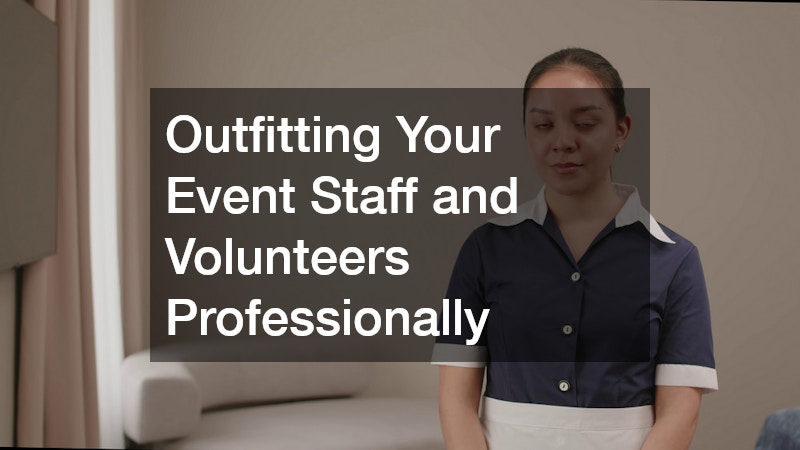
If your event involves staff or volunteers, the way they look matters more than most hosts realize. A consistent, professional appearance signals to guests that the event is well-organized, builds confidence in your team, and simply looks better in photos. It does not have to be expensive to achieve.
Screenprinting is one of the most cost-effective ways to outfit a larger group of staff or volunteers with a unified look. Printed t-shirts or polo shirts in a consistent color with a simple event logo or label can be produced at very reasonable per-unit costs, particularly when ordered in volume and with enough lead time to avoid rush fees. The further in advance you place your order, the more options you have and the less you pay.
For a more polished or formal event, embroidery on hats, shirts, or jackets creates a finished look that feels intentional and professional. Embroidered apparel costs more per piece than screenprinted items, but the difference in appearance is significant for events where presentation is a priority. Either way, planning your staff apparel at least six to eight weeks before the event gives you the best combination of options, pricing, and turnaround time.
Planning for Guest Comfort in an Outdoor Setting
Guest comfort at an outdoor event is not a luxury consideration; it’s a practical one. Uncomfortable guests leave early, and they remember the discomfort more than the decorations or the food. Addressing the most common comfort issues proactively and affordably is one of the hallmarks of a well-planned event.
Sanitation is at the top of that list for any event held away from a permanent facility. Portable toilet rentals have improved dramatically in quality over the past decade, and the days of guests reluctantly tolerating unpleasant conditions are largely behind us. Modern units are clean, well-ventilated, and available in configurations that include handwashing stations. For larger events or longer durations, luxury restroom trailers offer an experience that genuinely rivals permanent facilities.
Supplementing your restroom facilities with hand hygiene stations positioned throughout the event space is a small investment with a large impact on guest experience. Dry hand wipes stationed near food service areas, activity zones, and seating sections give guests a convenient hygiene option without requiring proximity to a sink or a restroom trailer. They are inexpensive, compact, and easy to replenish throughout the event.
Keeping Your Event Safe Without Hiring a Full Security Firm
Safety is a topic that small and mid-sized event planners often avoid thinking about because it feels either unnecessary or prohibitively expensive. Neither assumption is accurate. Even a modest outdoor event benefits from having some organized safety presence, and there are ways to provide that presence without committing to a large contract with a full-service firm.
The first step is an honest assessment of what your event actually requires. A backyard birthday party for fifty people has different needs than a community festival drawing five hundred. Factors that influence your safety needs include the size of the crowd, the presence of alcohol, the age range of attendees, the time of day, and the layout of the space. Event security guards can be hired on a per-shift basis for specific roles, such as managing entry points, monitoring parking areas, or providing a visible presence near the cash handling area, without engaging a full team for the entire event.
Managing Signage and Communication at Your Event
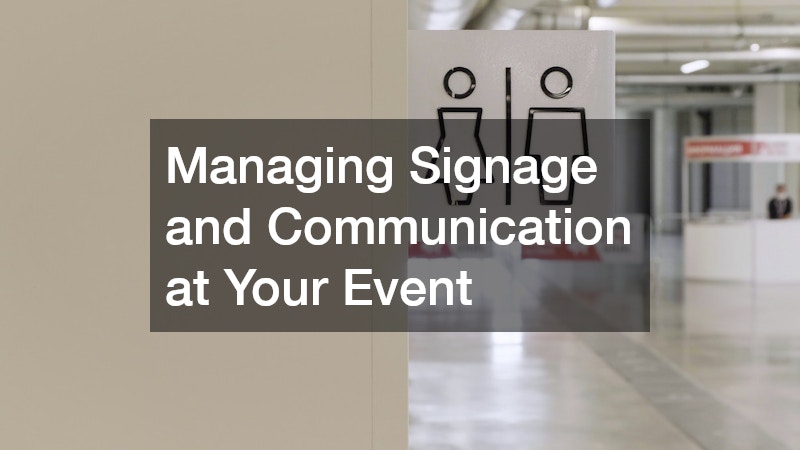
Clear, well-placed signage is one of the most undervalued investments in outdoor event planning. Guests who cannot find the entrance, restrooms, food stations, or parking area become frustrated quickly, and that frustration colors their experience of everything else. Solving a navigation problem with a well-placed sign costs almost nothing compared to what it saves in confusion and guest dissatisfaction.
LED signs are an increasingly affordable and flexible option for outdoor event signage, particularly for events that run into the evening or take place in areas with variable lighting conditions. Bright, readable, and available in programmable formats that can display multiple messages in rotation, they are a step up from printed banners in both visibility and versatility. Rental options are available for events that do not justify the cost of purchase.
Planning an outdoor event on a budget is fundamentally an exercise in preparation. Every dollar you save comes from a decision you made in advance, whether that was booking a vendor during an off-peak window, sourcing food wholesale rather than through a caterer, or ordering staff apparel with enough lead time to avoid rush pricing. The event that looks effortless on the day is almost always the one that was most carefully thought through in the weeks and months before.
Approach each category of your event as its own opportunity to be creative and intentional. There is no single area where the savings are so large that they cover for overspending everywhere else. The budget-friendly outdoor event is built one good decision at a time, across every line item, from the largest vendor contract to the smallest supply order. Keep that principle in mind, stay organized, and give yourself enough time to plan properly. The result will be an event that your guests enjoy and that you can be proud of, without a budget hangover that lasts long after the last guest goes home.