
Every month, homeowners dread their utility bills. With fluctuating energy costs and rising baseline rates, household budgeting feels unwinnable. Common advice often focuses on sacrifice: lowering thermostat settings, taking shorter showers, or sitting in darkness for minimal savings. Behavioral changes rarely make a significant dent while ignoring larger inefficiencies in your home’s structure and systems.
The true key to reducing utility bills is structural and mechanical optimization. Your home is an interconnected system where neglecting one part increases strain elsewhere, wasting money. Imagine your home as a bucket with holes; adding water is futile without patching them. By maintaining your property and consulting experts for upgrades, you can improve efficiency and retain more of your money.
Optimizing Your Climate Envelope
Your home’s climate envelope is the physical barrier that separates your conditioned indoor air from the volatile elements outside. When this envelope is compromised, your heating and cooling systems are forced into an endless, losing battle against Mother Nature. During the winter, expensive heated air rises and escapes through structural gaps, pulling freezing air inward through the lower levels. In the summer, the reverse happens, as blistering heat radiates through the walls and warm air infiltrates your living spaces. Fortifying this perimeter is the absolute first step in reclaiming control over your energy bills.
To start, you must look closely at your exterior walls. Over time, traditional cladding materials can warp, crack, or pull away from the framing, exposing the underlying house wrap to moisture and wind. When wind penetrates these outer defenses, it degrades the R-value, which is the measure of thermal resistance, of the insulation nestled inside your wall cavities. Upgrading to modern insulated vinyl or composite materials creates an unbroken thermal blanket around your home, effectively eliminating structural thermal bridging where heat travels rapidly through wood studs.
- Perform a visual check around the perimeter of your house, looking for gaps where the wall siding meets the foundation or window trim.
- Feel for localized cold spots on your interior drywalls during winter, which point to sagging or degraded insulation within the wall cavity.
- Consider the long-term compounding savings of hiring a certified siding company to update old exterior profiles and install high-density insulation backing.
Windows are often weak points in the climate envelope, acting as thermal holes in a wall. If you have older single-pane windows or failed seals on double-pane units, you’re essentially paying to condition the outdoor air. Functional double or triple panes have spaces filled with dense, non-reactive gases like argon or krypton, significantly slowing heat transfer.
- Use the simple candle test: light a candle and move it slowly around your window frames on a windy day; if the flame flickers, you have an air leak.
- Look for condensation or persistent fogging between the glass panes, which signals that the insulating gas has completely escaped.
- Reach out to established window suppliers to explore low-emissivity glass upgrades that bounce radiant heat back to its source, whether that means keeping heat inside during December or outside during July.
Maximize Heating and Cooling Efficiency
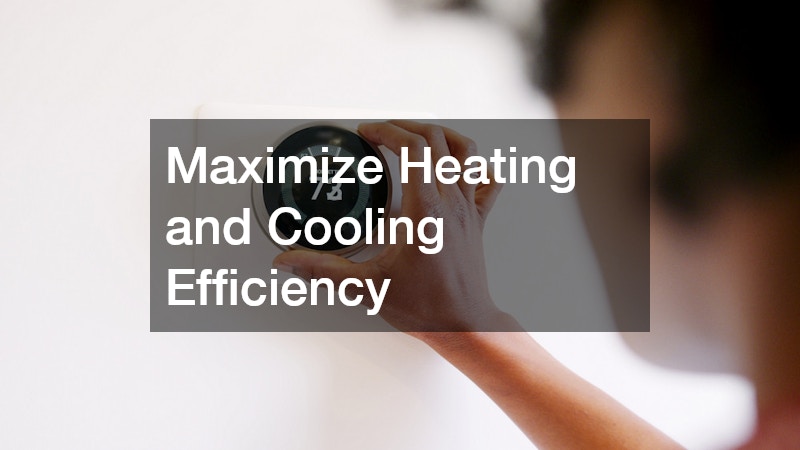
Heating and cooling make up the single largest chunk of the average residential utility bill, sometimes devouring more than half of a household’s monthly energy budget. Because these mechanical systems are complex and hidden away in basements or utility closets, they are frequently neglected until they stop working entirely. Running an unmaintained climate control system is like driving a car for years without ever changing the oil. It might keep moving for a while, but its fuel efficiency will plummet, and the engine will eventually destroy itself under the strain.
Annual tune-ups are non-negotiable if you want to keep your energy usage low. Over a single season of heavy use, dust, pet dander, and outdoor debris coat the sensitive internal components of your heating and cooling machinery. A thin layer of dust on an evaporator coil behaves exactly like an insulating blanket, preventing the refrigerant lines from absorbing heat efficiently. This forces the system to run for much longer cycles just to satisfy the temperature setting on your thermostat, driving up your kilowatt-hour usage and putting intense wear on the compressor.
- Replace your air filters every thirty to ninety days; clogged filters choke off system airflow and force the blower motor to draw excess electricity.
- Clear away tall weeds, leaves, and trash from the outdoor condenser unit to ensure that heat can dump freely into the outside air.
- Schedule routine seasonal maintenance with local HVAC contractors to test electrical connections, measure refrigerant charge, and deep-clean the heat exchangers.
When systems reach the end of their operational lifespan, usually around fifteen years, routine maintenance can only do so much to salvage their efficiency. Old equipment operates on obsolete technology, consuming vastly more power than modern alternatives. Modern cooling systems are judged by their seasonal energy efficiency ratio, and upgrading from an old system to a new unit can cut your cooling costs by a massive margin.
- Check the energy guide label on your current outdoor unit to find its efficiency rating, comparing it against the strict standards of modern systems.
- Make sure a professional performs a precise load calculation before any new air conditioning installation; an oversized unit will turn on and off rapidly, wasting energy and wearing out components prematurely.
- Focus on variable-speed technology, which allows the machine to run continuously at lower, highly efficient speeds rather than constantly kicking on at maximum power.
Taming the Water and Drainage Overhead

While electricity and gas get most of the attention in energy-saving discussions, your water utility bill can be a massive financial drain all on its own. Water waste is particularly insidious because it often happens out of sight, beneath floors, inside walls, or down drains. Furthermore, water and energy are deeply intertwined. It takes energy to pump water into your home, energy to heat it, and energy for your appliances to push it back out through the sewage lines.
The first priority in controlling water costs is identifying and neutralizing hidden structural leaks. A single toilet with a faulty flapper valve can waste thousands of gallons of water a day, quietly adding hundreds of dollars to your quarterly bill without making a sound. Excessively high water pressure from the municipal supply line can also wreak havoc, forcing water past seals, causing pipes to vibrate, and resulting in massive volumetric waste every time a faucet is turned on.
- Put a few drops of food coloring into your toilet tanks; if the color creeps into the bowl within twenty minutes without flushing, your valve is leaking.
- Monitor your water meter during a two-hour window when no water is being actively used in the house; if the dial moves at all, you have an active leak somewhere.
- Enlist the help of a licensed plumber to install a pressure-reducing valve, keeping your home’s water pressure at a safe, resource-saving level.
An often overlooked aspect of utility management is the mechanical resistance in drainage infrastructure. When primary waste lines are constricted by grease, root intrusion, or mineral buildup, water drains more slowly. High-efficiency appliances, like dishwashers and washing machines, use sensors to monitor water levels and cycle durations. If water can’t evacuate at the designated speed, electric pumps cycle repeatedly and run longer to clear the basin, increasing water and electric consumption.
- Watch for bubbles or gurgling sounds coming from your sinks when the washing machine drains, which indicates restricted airflow and fluid drag in the lines.
- Avoid pouring fats, oils, or fibrous food waste down your kitchen drains, as they solidify and create a thick sludge along the interior pipe walls.
- Schedule a preventative visit from a professional drain cleaning service to scour the lines back to their original diameter, ensuring rapid, low-resistance fluid flow.
Managing Thermal Loss from Roof and Landscape

The top of your house acts as a giant thermal chimney. Because warm air naturally rises, your roof is under constant pressure during the winter as heat tries to force its way out into the atmosphere. In the summertime, the roof bears the full brunt of radiant solar energy, absorbing immense heat that can raise attic temperatures to a stifling one hundred and forty degrees. Managing this intense thermal boundary requires a combination of smart roofing physics and strategic landscaping.
Proper roof ventilation is paramount to keeping your cooling costs low in the summer. If an attic lacks balanced airflow, that trapped, superheated air will eventually penetrate through the ceiling insulation and heat the living spaces below. This turns your home into a greenhouse and forces your air conditioner to run around the clock. In the winter, poor ventilation traps moisture from the living spaces, which condenses on the rafters, ruins insulation, and contributes to ice dams that destroy roofing materials.
- Inspect your attic insulation to ensure it is distributed evenly and is not blocking the soffit vents located along the lower edges of the roofline.
- Check for signs of mold, mildew, or a powerful musty odor in your attic space, which are clear indicators of stagnant, unventilated air.
- Coordinate with reputable roofers to inspect your ridge vents, install radiant heat barriers, and ensure your attic floor is sealed tightly against air bypasses.
The immediate outdoor landscape plays a passive role in how hard your mechanical systems work. The surrounding microclimate can be modified to provide natural shade and windbreaks. A property totally exposed to the elements will experience higher wind-chill effects in the winter and intense solar baking in the summer, leading to higher utility bills.
- Plant deciduous trees on the south and west sides of your property; their lush summer leaves will block intense solar heat, while their bare winter branches will let the welcome sun warm your walls.
- Keep bushes and ornamental trees trimmed at least three feet away from your home’s exterior walls to prevent moisture retention and maintain local airflow.
- Utilize a precise tree trimming routine to keep heavy branches away from your roofline while maintaining a healthy canopy that shades the home.
Specialized System and Surfaces Upgrades
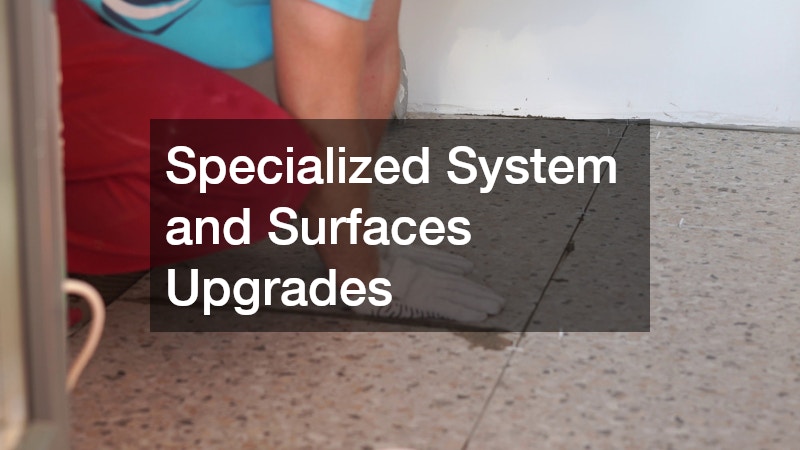
Beyond the broad strokes of climate envelopes and major heating units, there are highly specialized areas inside your home that require regular care to remain energy efficient. These are the niche mechanical appliances and architectural surfaces that quietly consume resources day in and day out. Addressing these specific zones can provide the final, meaningful reductions needed to bring your utility costs down to an absolute minimum.
Your water heater is typically the second-largest energy consumer in the entire household, outpaced only by the main climate control system. Whether you run a gas or electric tank model, it works constantly to maintain a standby supply of hot water. Over time, municipal water introduces dissolved minerals like calcium and magnesium into the tank. As the water is heated, these minerals crystallize and settle to the bottom, forming a thick, rock-hard layer of sediment right over the heating elements or burners.
- Listen to your water heater while it runs; if you hear a popping, rumbling, or knocking sound, that is the sound of water boiling beneath a thick layer of trapped sediment.
- Check the temperature setting on your water heater dial; lowering it from the standard factory setting of one hundred and forty degrees down to one hundred and twenty degrees can save you a bundle in standby heat loss.
- Invest in professional water heater service once a year to completely flush out accumulated mineral scale and replace the sacrificial anode rod that prevents interior tank rust.
Finally, examine damp areas in your home, such as kitchens, bathrooms, and laundry rooms, which experience high airborne moisture and humidity. When moisture penetrates walls and floors, it alters the thermal properties of building materials. Damp drywall or subfloors conduct heat faster than dry materials, creating a thermal leak that lets conditioned air escape. Moreover, high humidity forces your cooling system to run longer to dehumidify the air before effectively lowering the temperature.
- Inspect the grout and caulking lines around your showers, sinks, and backsplashes for cracks, crumbling sections, or signs of water bypass.
- Ensure your bathroom exhaust fans are clear of dust and vent completely to the outdoors, rather than dumping humid air directly into your attic space.
- Hire professional tile contractors to repair compromised wet-zone surfaces, reseal porous grout lines, and install modern water-resistant backer systems that prevent moisture from infiltrating your structural walls.
Reducing your monthly utility bills is achievable by viewing home maintenance as a financial investment. Sealing structural gaps, cleaning mechanical components, and fixing plumbing leaks can lower living costs and ensure your home runs smoothly and efficiently. Efficiency is achieved through consistent upkeep and smart property management. Instead of overhauling your entire house in one weekend, address one or two high-impact areas monthly. Targeted improvements to your home’s structure and infrastructure provide a comfortable living environment while controlling utility costs.